
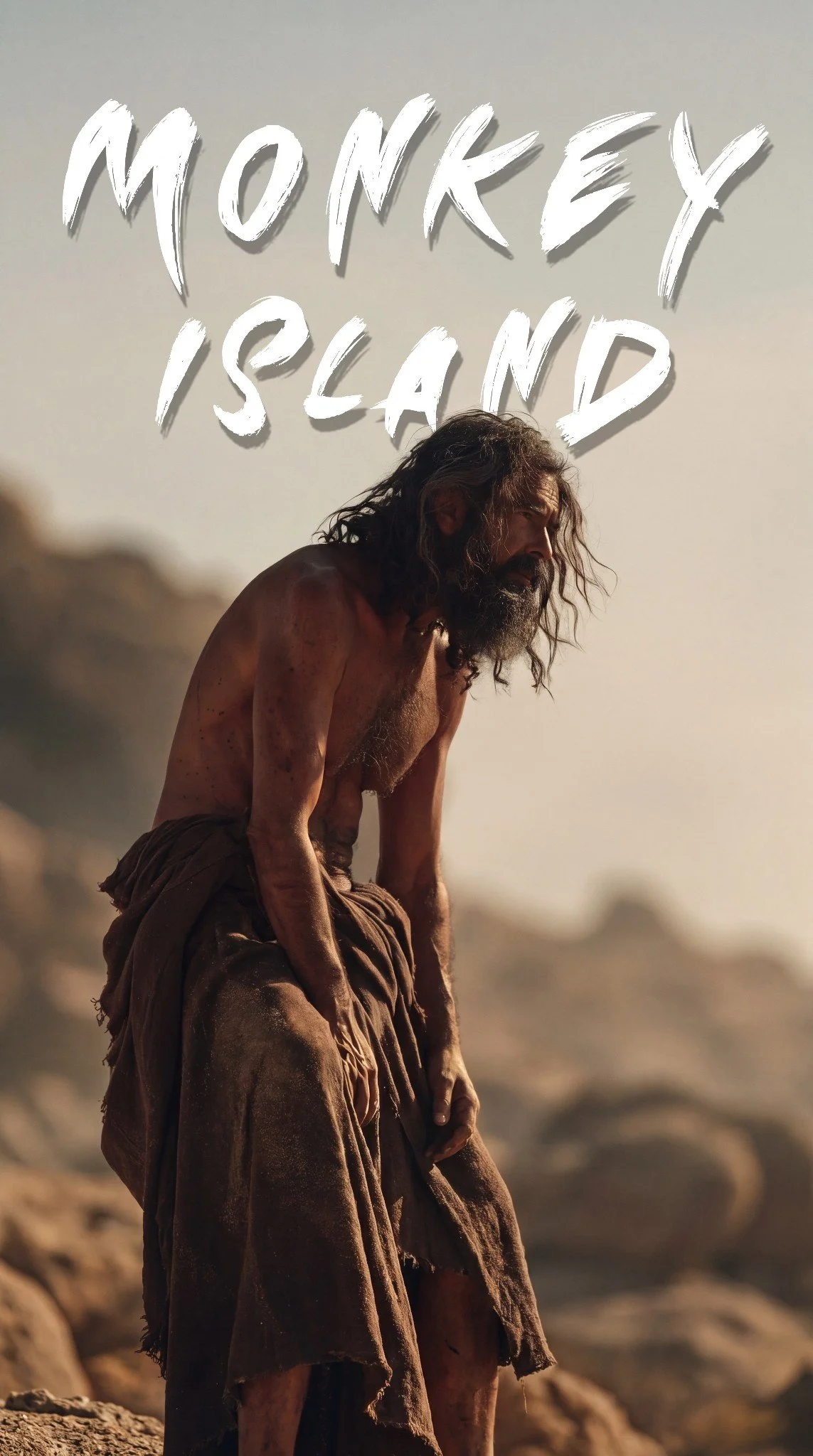
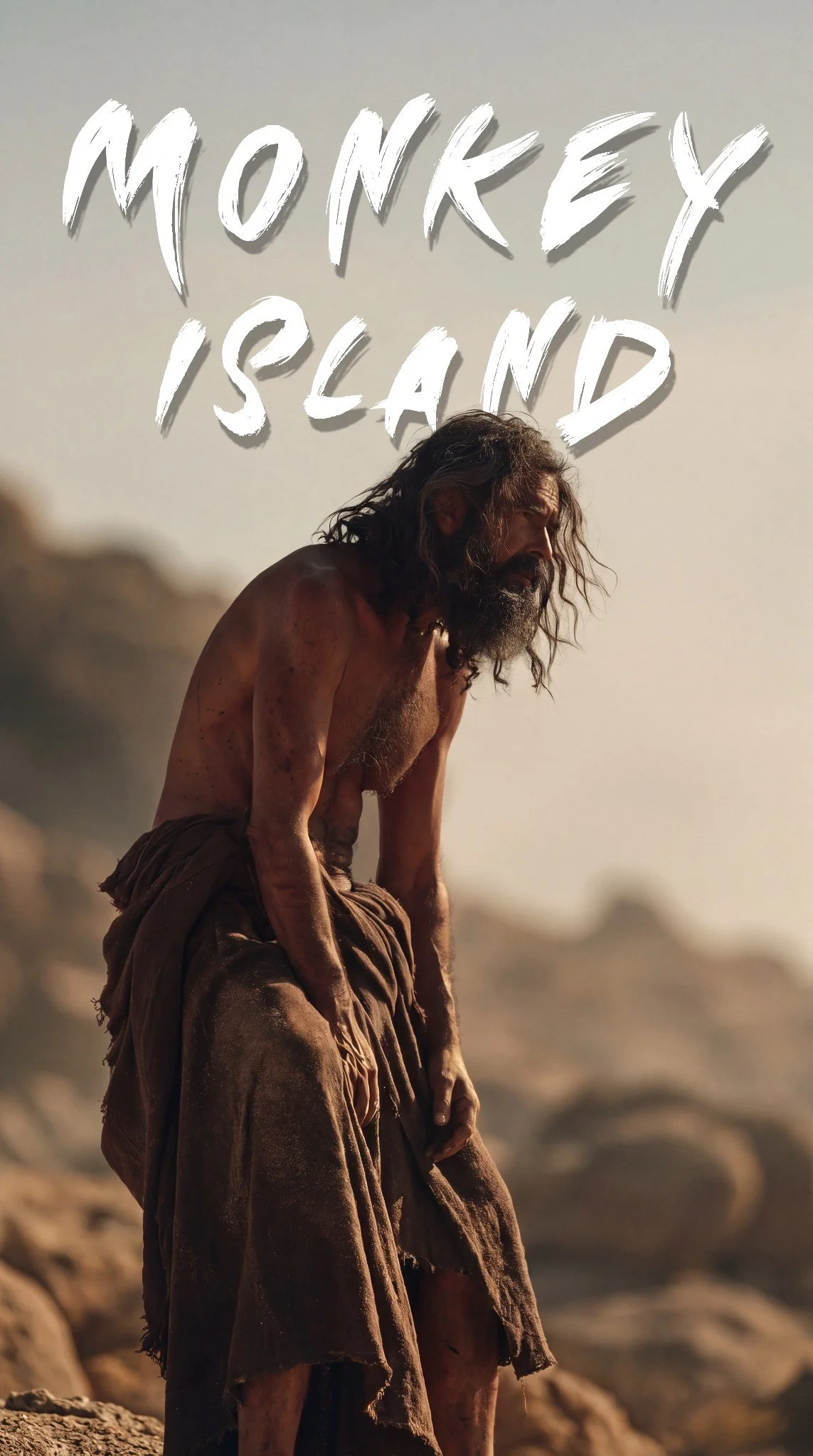
MONKEY ISLAND
A FILM BY PETER OBSCY
Are we advancing forward, or moving backward?
A dialogue-free cinematic fable about evolution, imitation, and the illusion of progress.
SHORT FILM · TARGET RUNTIME 12–14 MINUTES · IN DEVELOPMENT
01 / The story
As a group of apes rebuilds a society around the remnants of human civilization, one observant outsider turns toward nature. His discoveries bring him closer to awareness, and further from the flock.
On a dying island, an old man destroys the last fruit tree after others take the food he has harvested. A desperate chase begins. Bodies bend, hands meet the ground, and human movement gives way to something more primitive.
Generations later, objects from a lost civilization wash onto a new shore. The apes collect them, imitate their uses, and build a hierarchy around meanings they do not understand. One of them walks away. In the woods, observation becomes invention, and invention becomes the beginning of a different future.
02 / The observer and the flock
The protagonist
Quiet, curious, and increasingly isolated. He learns by watching the natural world. Every discovery changes how he sees his surroundings, and deepens the distance between him and the others.
The flock
A collective driven by imitation, possession, and belonging. Washed-up objects become symbols of power. Difference becomes a threat.
03 / A world told through images
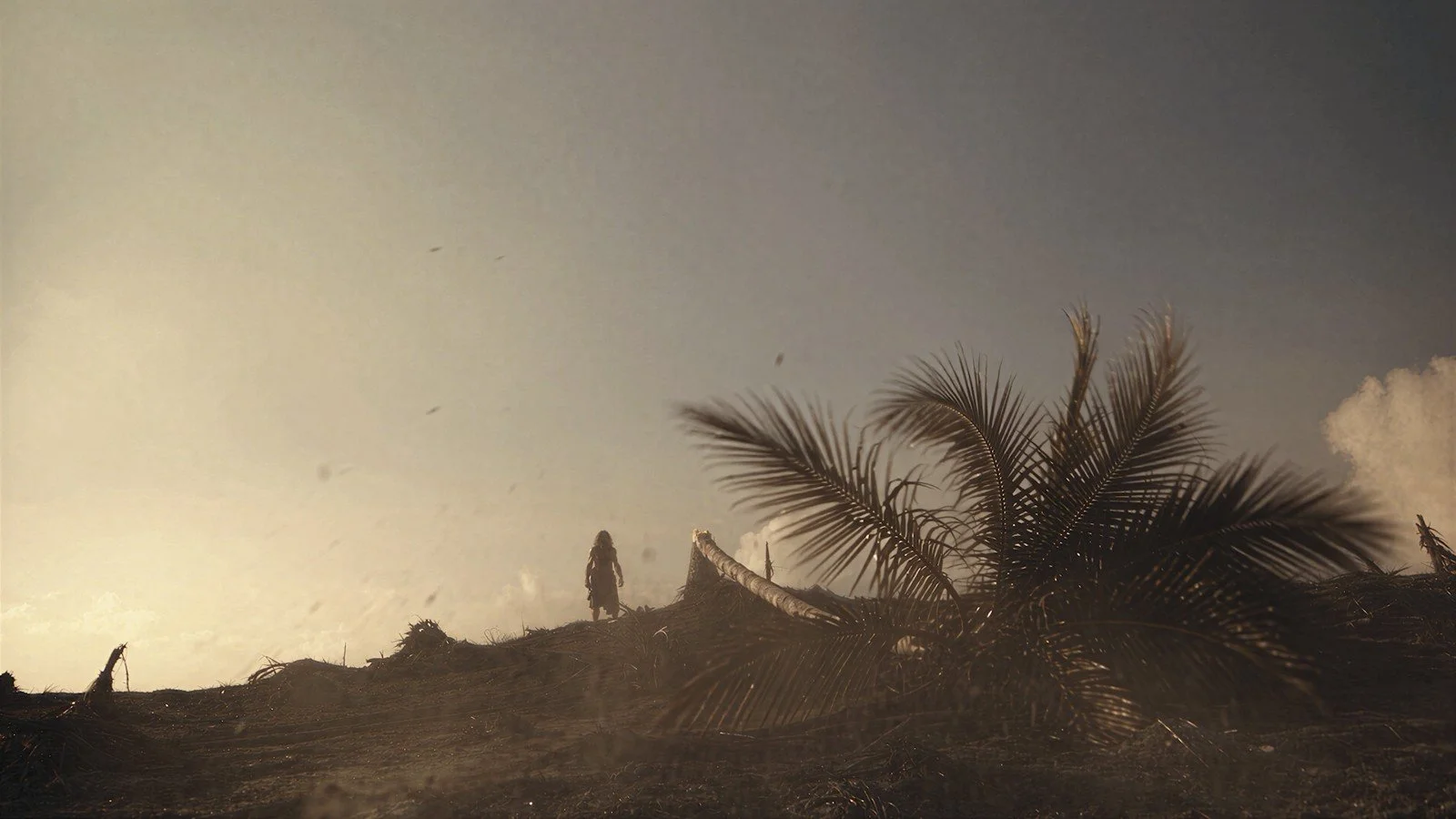
Empty shores. Weathered skin. A single living tree. The film moves from a stripped, dying landscape into the uneasy shelter of the woods. Physical detail and patient framing make the world feel tangible, while the story unfolds like a dark psychological fable.
The visual language follows the contrast between repetition and discovery: the group repeats, the protagonist observes. Small gestures carry the emotional weight of dialogue.
04 / Sound becomes language
Breath, surf, wood, footsteps, and silence carry the story. Music enters at decisive emotional moments. Raw cello textures, deep drones, and percussive sounds are part of the intended sonic palette, giving the island and its inhabitants an unsettling inner voice.
05 / The filmmaking approach
Real performance sits at the center of a hybrid process combining filmed acting, motion capture, CGI, 3D environments, and AI-assisted image production. Facial expression, body language, editing, and sound are directed together to preserve an emotional thread across every shot.
The project is in development, with visual exploration and performance tests underway. The intended destination is an international short-film festival run.
06 / The filmmaker
Peter Obscy
An independent filmmaker and interior architect based in the San Francisco Bay Area. His work brings together spatial storytelling, performance, cinematography, and visual effects. His previous short, Unhandled Exception, was created through 3D environments and live-action greenscreen performance.
Let’s bring this world to life.
For creative collaboration and production conversations:
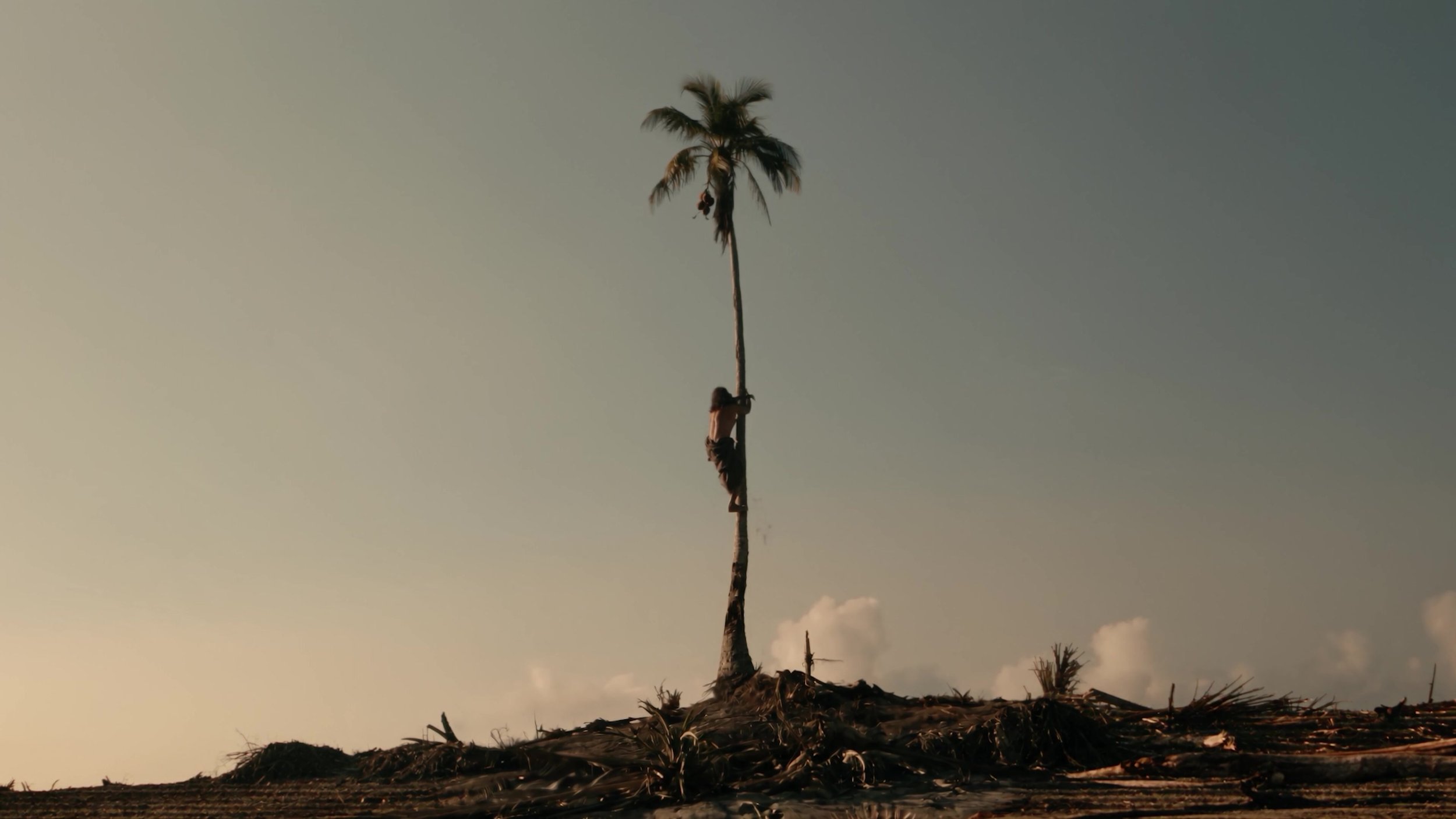
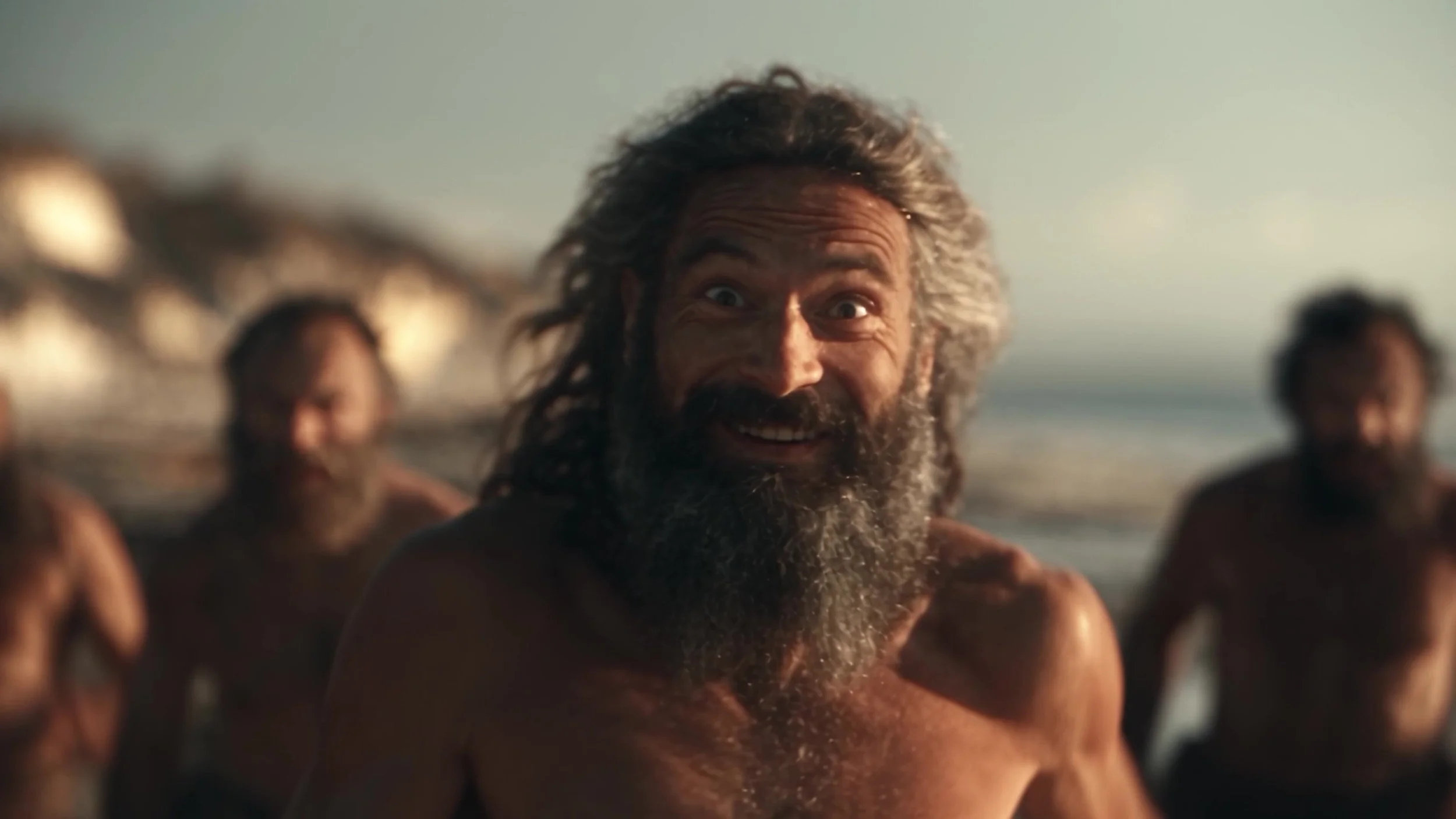
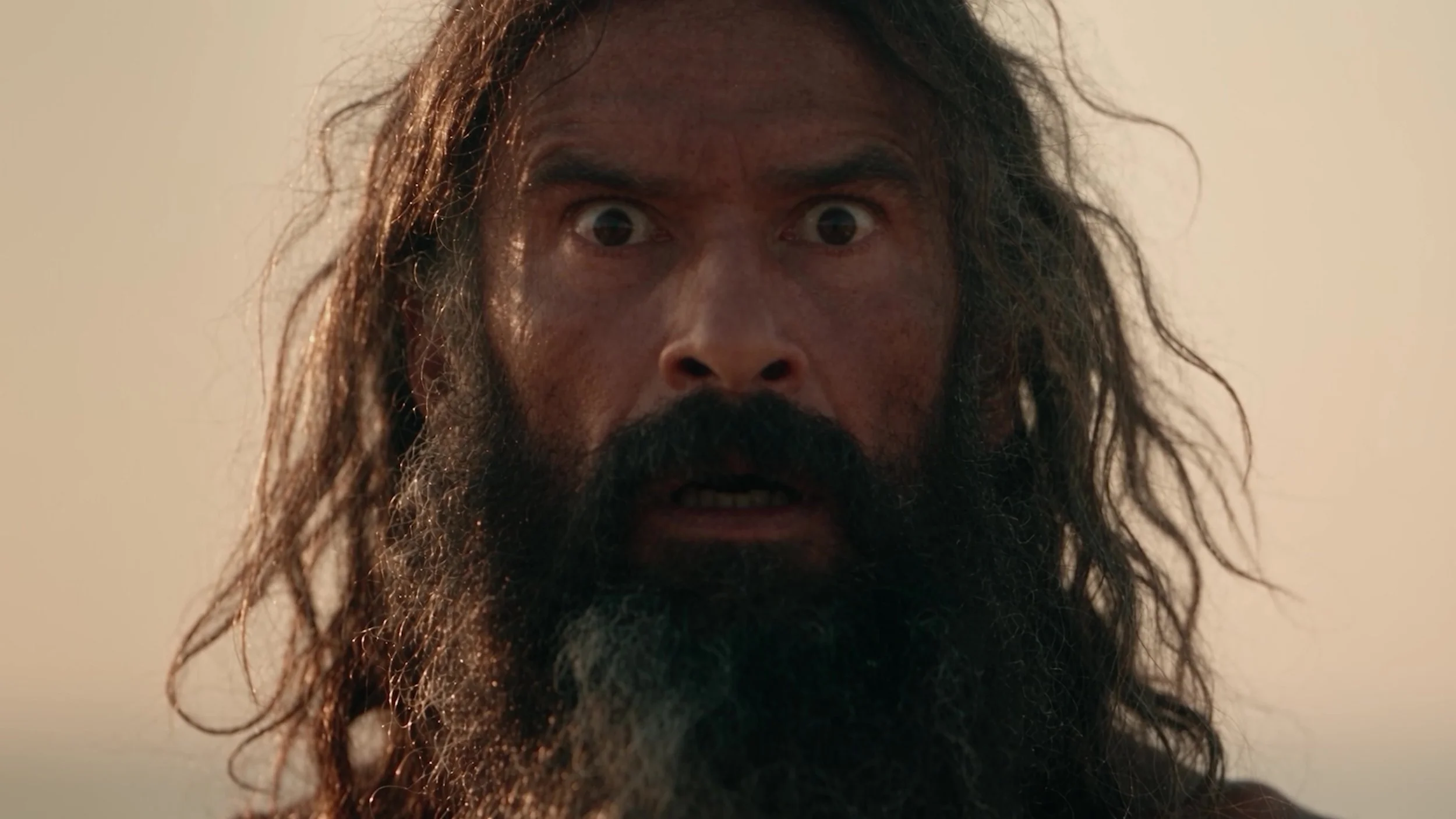
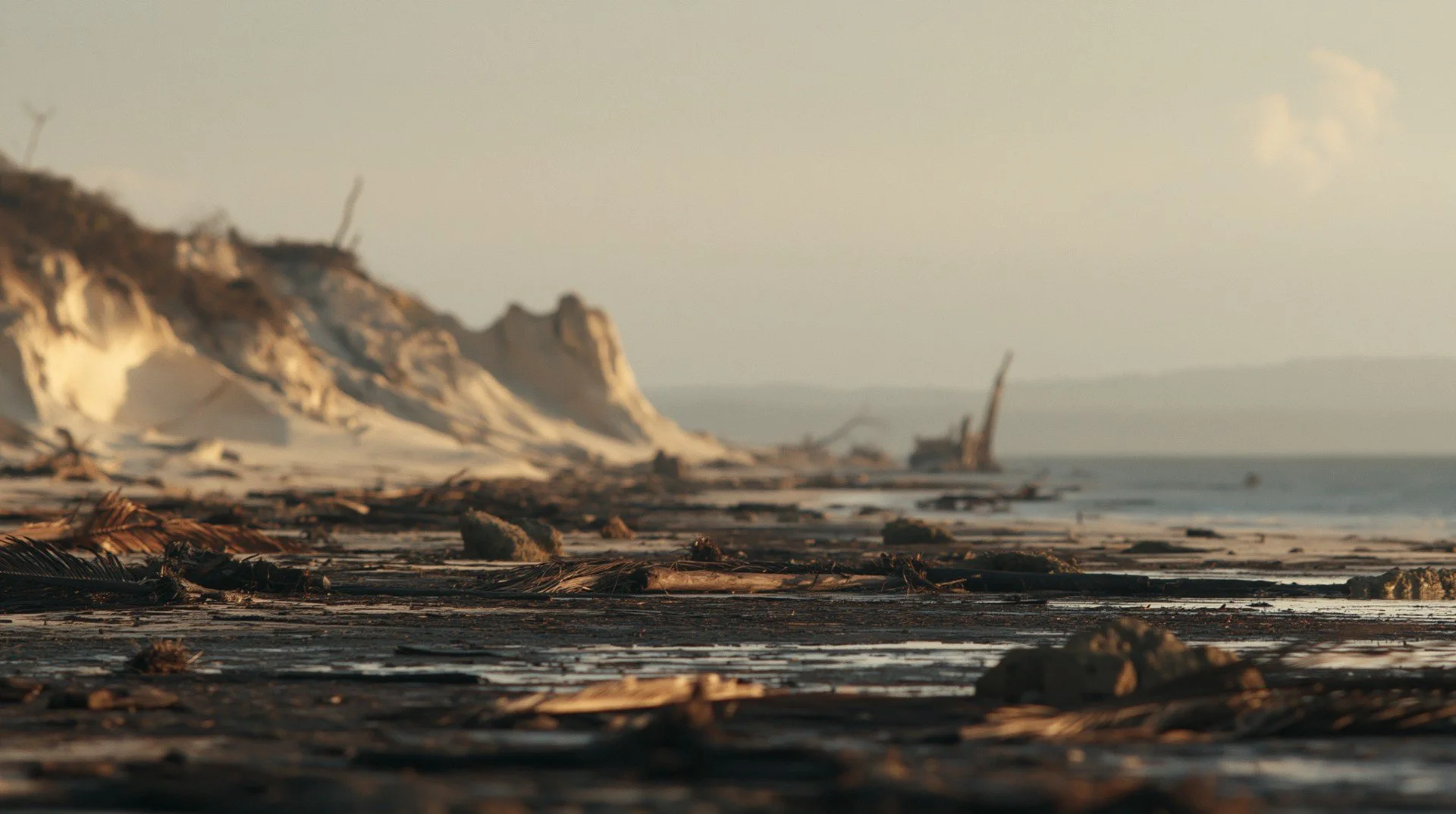
Opening sequence · Work in progress · 1 min 34 sec
A film by Peter Obscy
MONKEY ISLAND
What if progress brings us back to the very thing we tried to escape?
About the Film
Film synopsis
On a dying island, one final human act triggers a collapse backward. Generations later, apes discover the remnants of human civilization and begin to collect, imitate, worship, build hierarchy, and eventually repeat the same failures left behind by mankind.
Among them, one ape chooses a different path. While the others mistake imitation for progress, he turns toward nature, observation, and awareness.
Are we really evolving forward, or are we living through a reverse evolution?
Written and directed by
Peter Obscy
The Meaning of the Film
Are we advancing forward,
or moving backward?
Does civilization create inequality and violence, or give form to instincts already within us? The film follows survival as it becomes ownership, ownership as it becomes control, and invention as it becomes a weapon. Greater ability brings greater power, but no guarantee of greater wisdom.
The protagonist’s awareness exposes the cycle and separates him from it. His isolation is the human cost of seeing what the group refuses to see. The emotional journey moves from curiosity through tragic absurdity to an uncomfortable recognition: this world is our own.
Scene 1: The Last Fruit Tree
Opening sequence · Work in progress · 1 min 34 sec
One tree remains. An old man climbs for its fruit, only to find the others eating what he has gathered. What follows turns an act of survival into an irreversible choice.
This draft sequence introduces the film’s world, visual direction, and performance language. It is an excerpt from the film in development.
Inside the production
Building the World
Human performance.
A world built around it.
Monkey Island brings filmed acting, chroma stages, motion capture, 3D environments, CGI, and directed AI imagery into one hybrid filmmaking process. Performance gives the image its emotional truth; the visual world gives that performance its scale.
From chroma to the screen
01 / Chroma setup
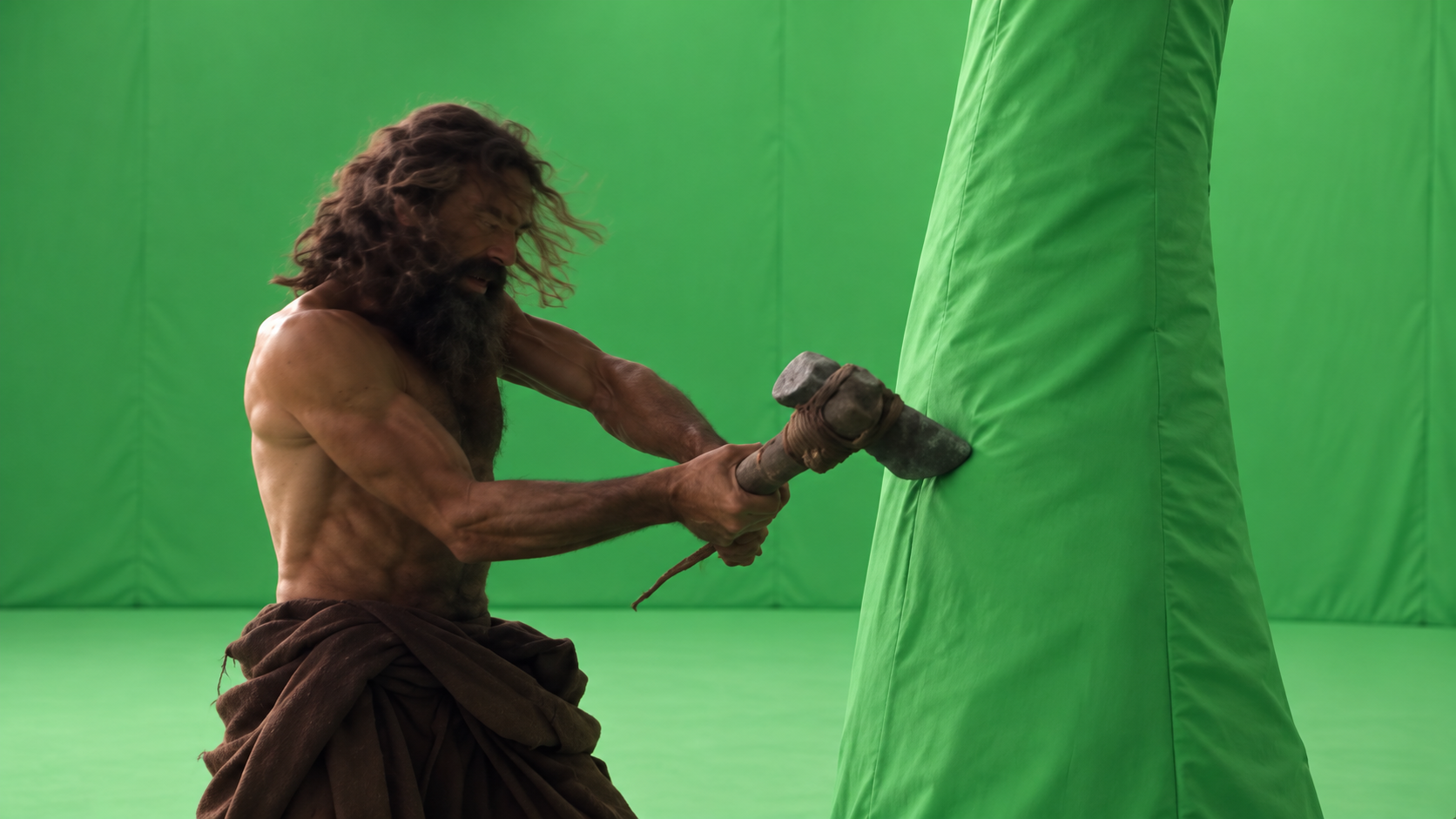
Chroma previsualization: grip, posture, contact, and the position of the tree.
02 / Scene 1 image
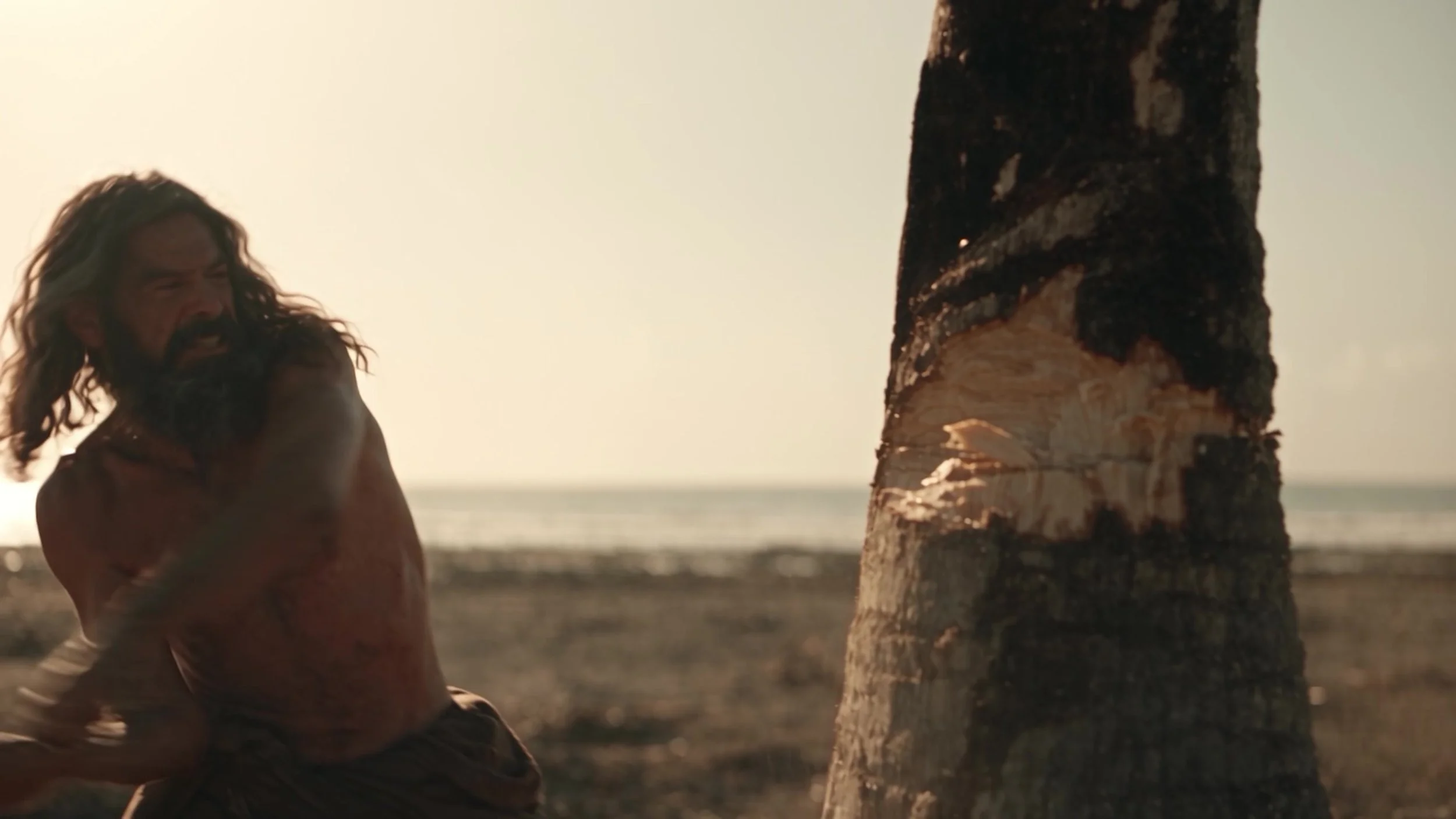
Production draft: the tree, shore, light, and atmosphere carry the act of destruction.
Process illustration: the chroma image is an AI-generated development reference. The screen image is from the Scene 1 work in progress. These are related staging examples, not a matched raw-footage and final-composite pair.
The dramatic action stays central as the surroundings change. Eyelines, body weight, the axe’s impact, camera direction, and light must agree so that the character belongs inside the constructed world.
The assets behind the image
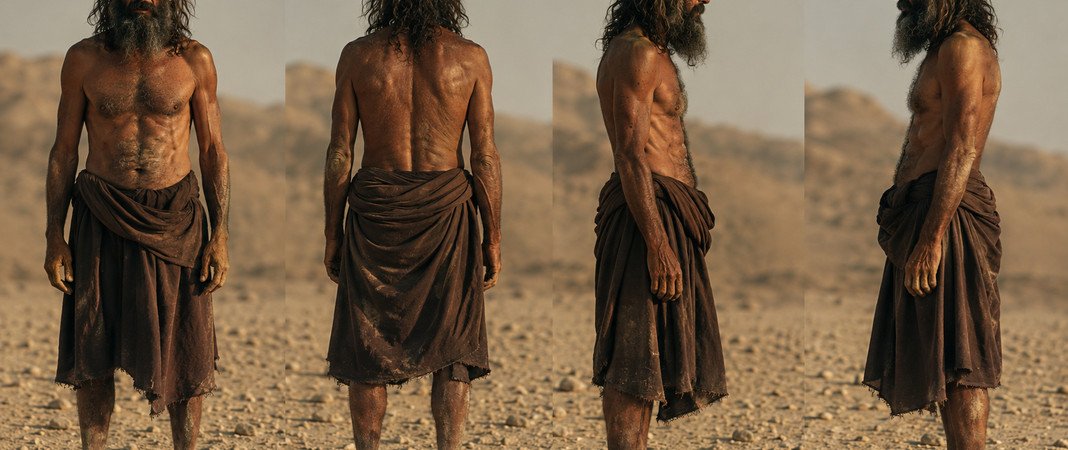
Character & continuity
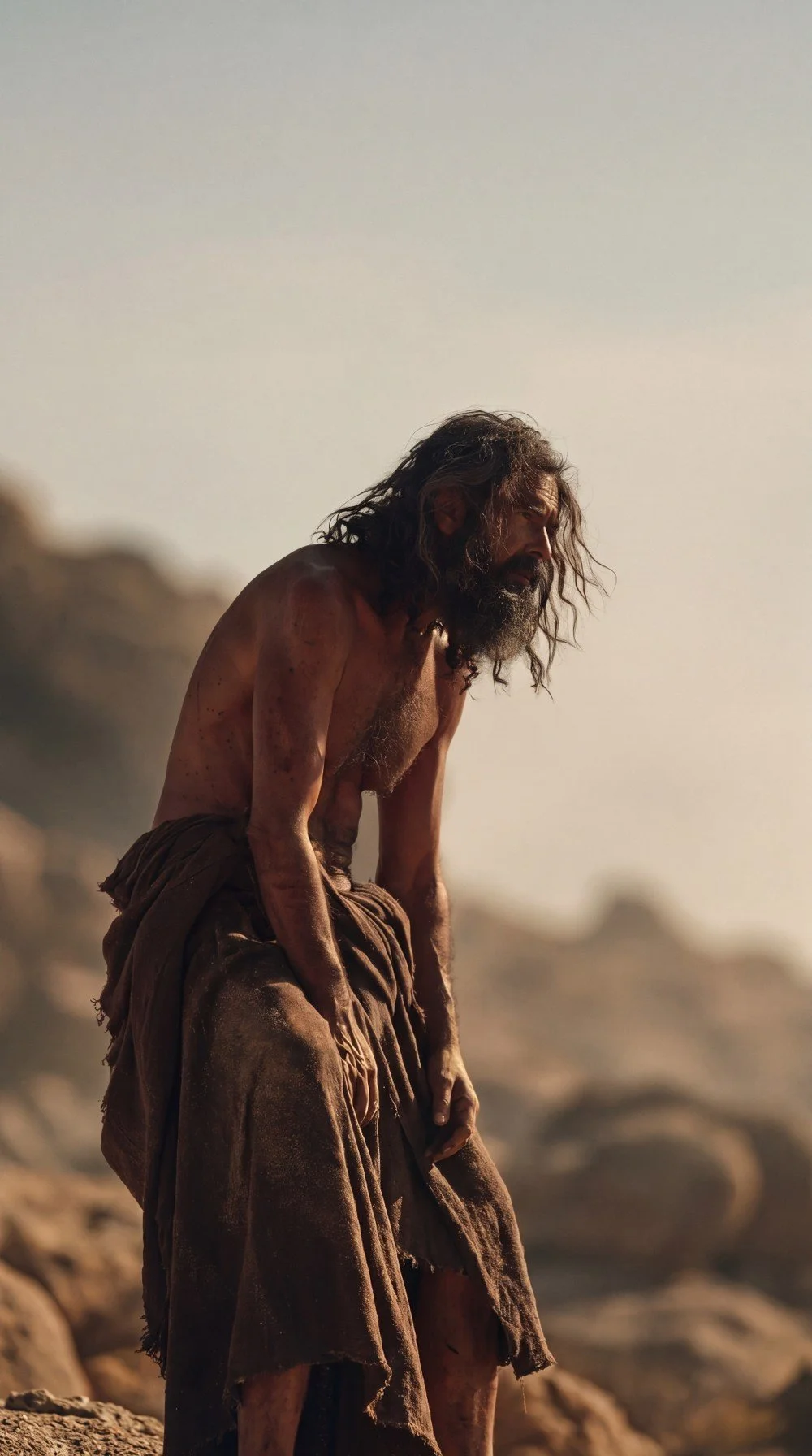
The same face, body, rough cloth, hair, and silhouette carry across changing angles and light. Performance frames then test gaze, hesitation, and emotional tension.
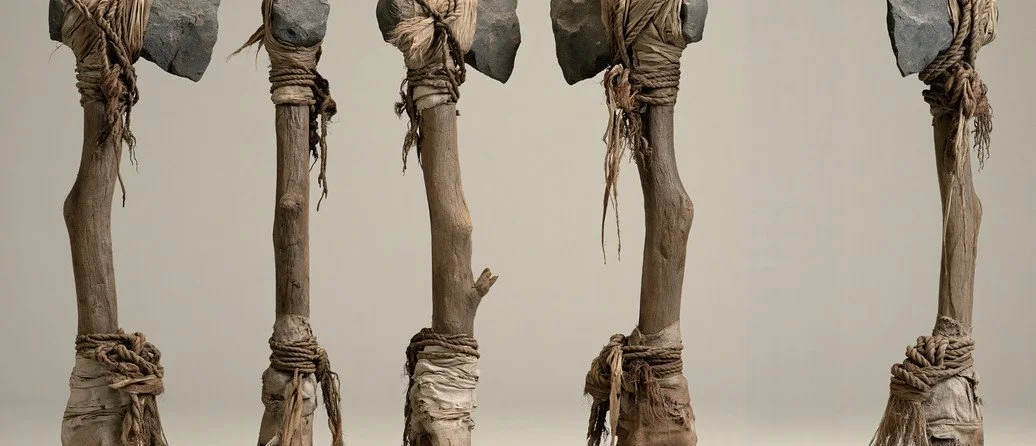
Props & physical contact
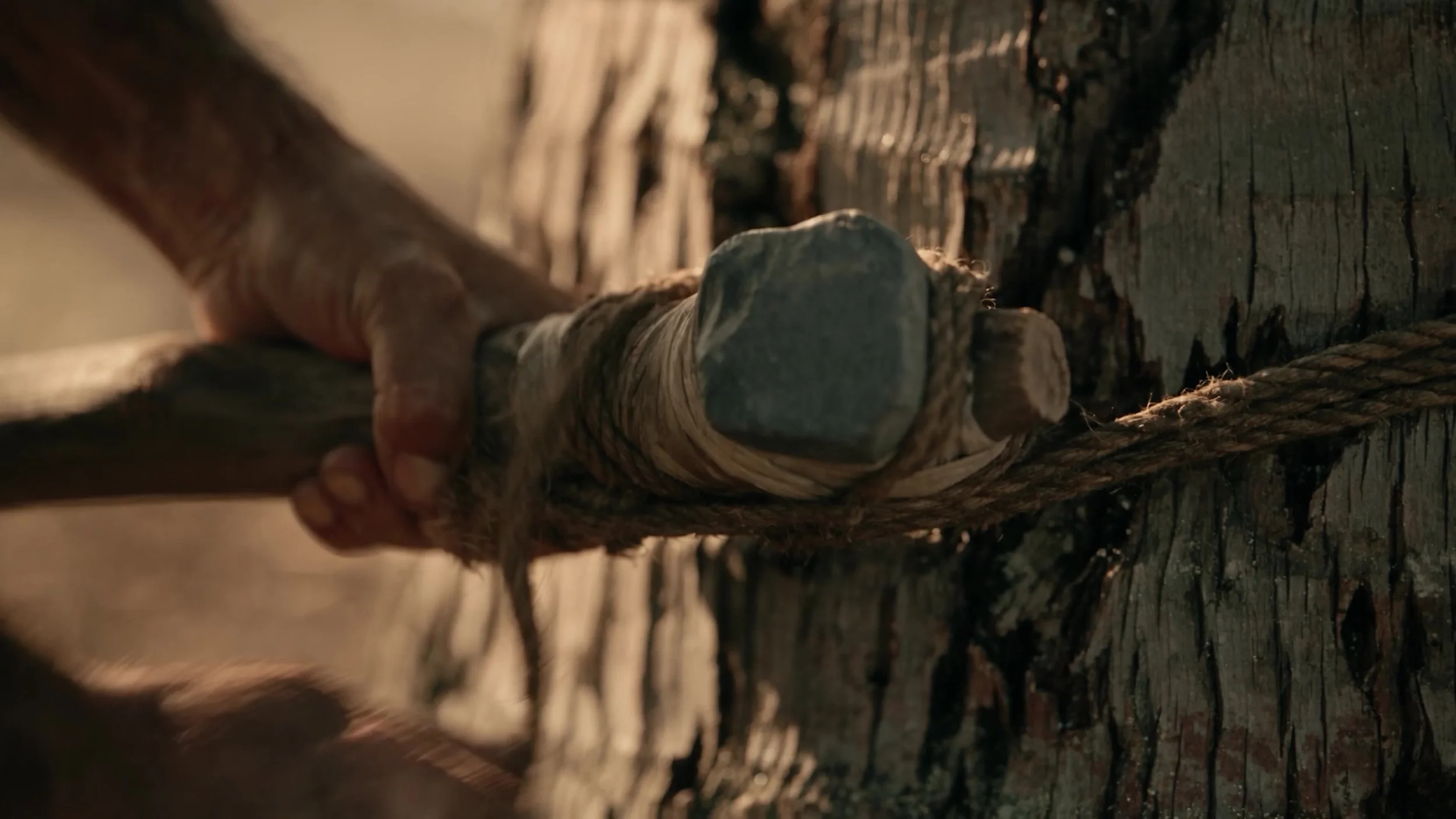
Wood, stone, rope, hand scale, and weight make the axe believable. Its design supports the story’s central reversal: a tool that feeds becomes a tool that destroys.
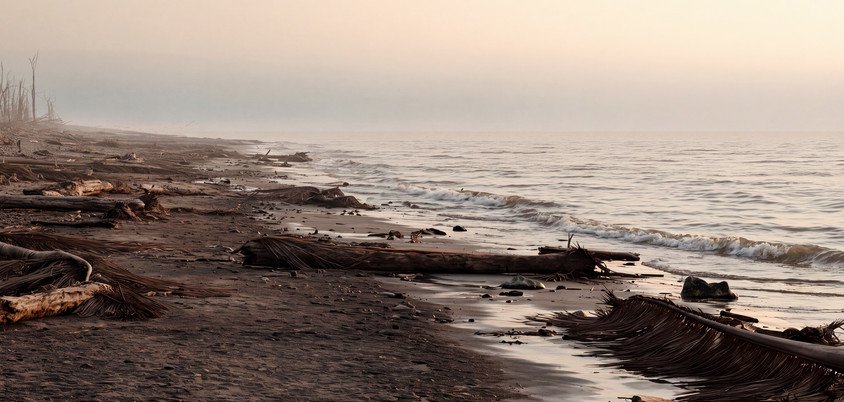
Environment & world design
Dry ground, bleached driftwood, sparse life, and a muted horizon establish scarcity. Set references guide the geography, camera positions, light, and atmosphere of the digital world.
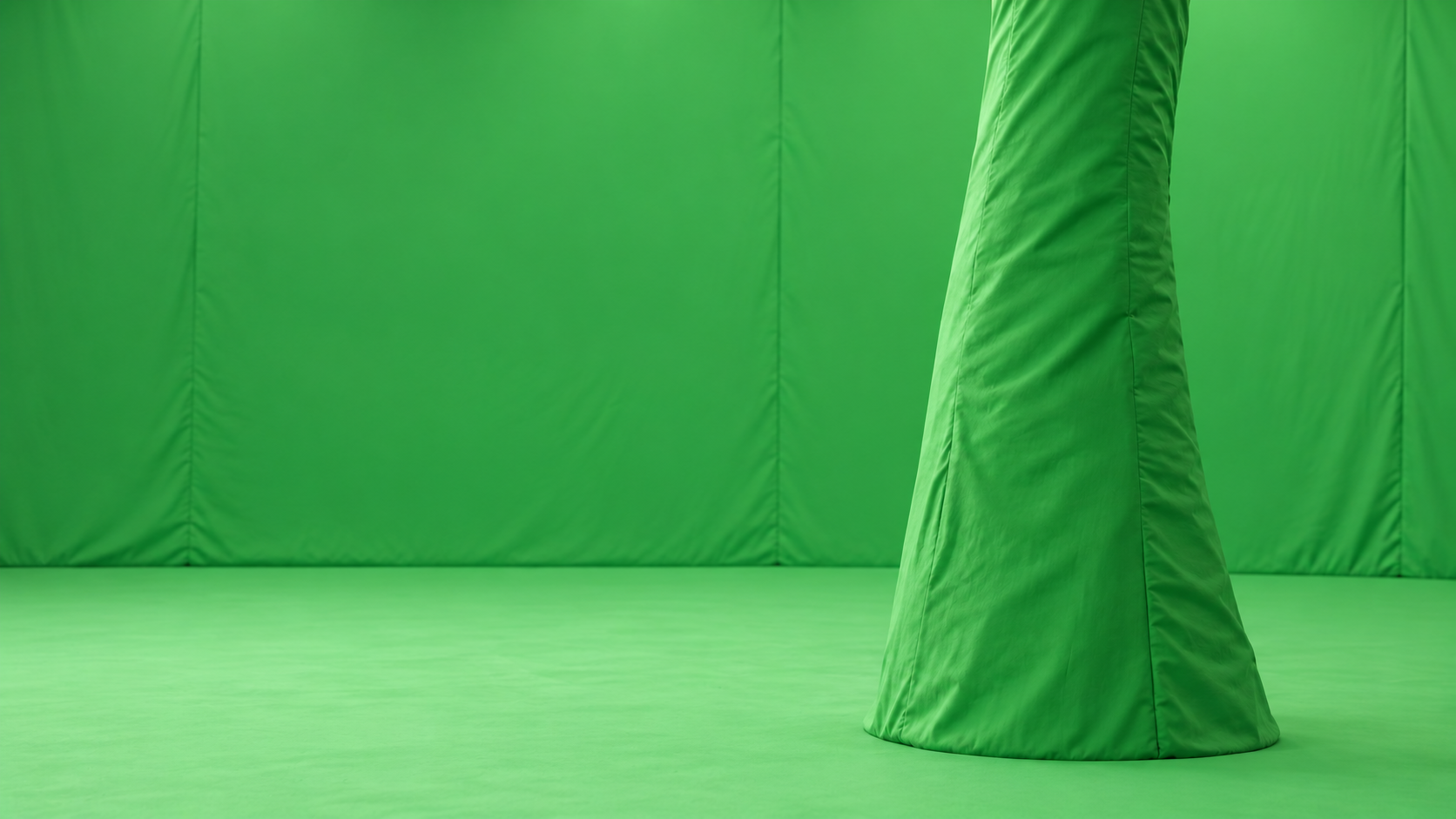
Stage & virtual space
A physical stand-in gives the action a point of contact. The stage and virtual environment are planned together around the performer’s movement and the shot’s framing.
Character, prop, and environment sheets are visual-development assets. The empty chroma stage is an AI-generated previsualization.
A hybrid filmmaking process
- 01 / Develop
Design the story’s world
Build character, prop, and environment references. Establish identity, scale, geography, and the purpose of each shot.
- 02 / Perform
Direct the human detail
Film acting on chroma and develop motion and facial capture for the apes. Gaze, breath, posture, and hesitation carry a story without dialogue.
- 03 / Construct
Build beyond the stage
Bring 3D sets, CGI, animation, and directed AI image and video work together. Choose the method around the needs of the scene.
- 04 / Integrate
Make one believable image
Composite the elements and review movement, contact, character identity, camera continuity, and light before the shot enters the edit.
- 05 / Finish
Shape the experience
Editing, color, ambience, sound design, silence, and a sparse score turn individual shots into the film’s emotional rhythm.
From proof of concept to a complete film
The opening sequence demonstrates the emerging visual language. The wider film is in development and production, with performance, asset creation, animation, compositing, and sound work continuing. This breakdown presents the production approach and its current development materials.
The goal is a controlled, emotionally specific short film in which live performance and digital craft serve the same dramatic idea.
DISCUSS THE PRODUCTIONFilm Stills
The old man climbs above a depleted shore.
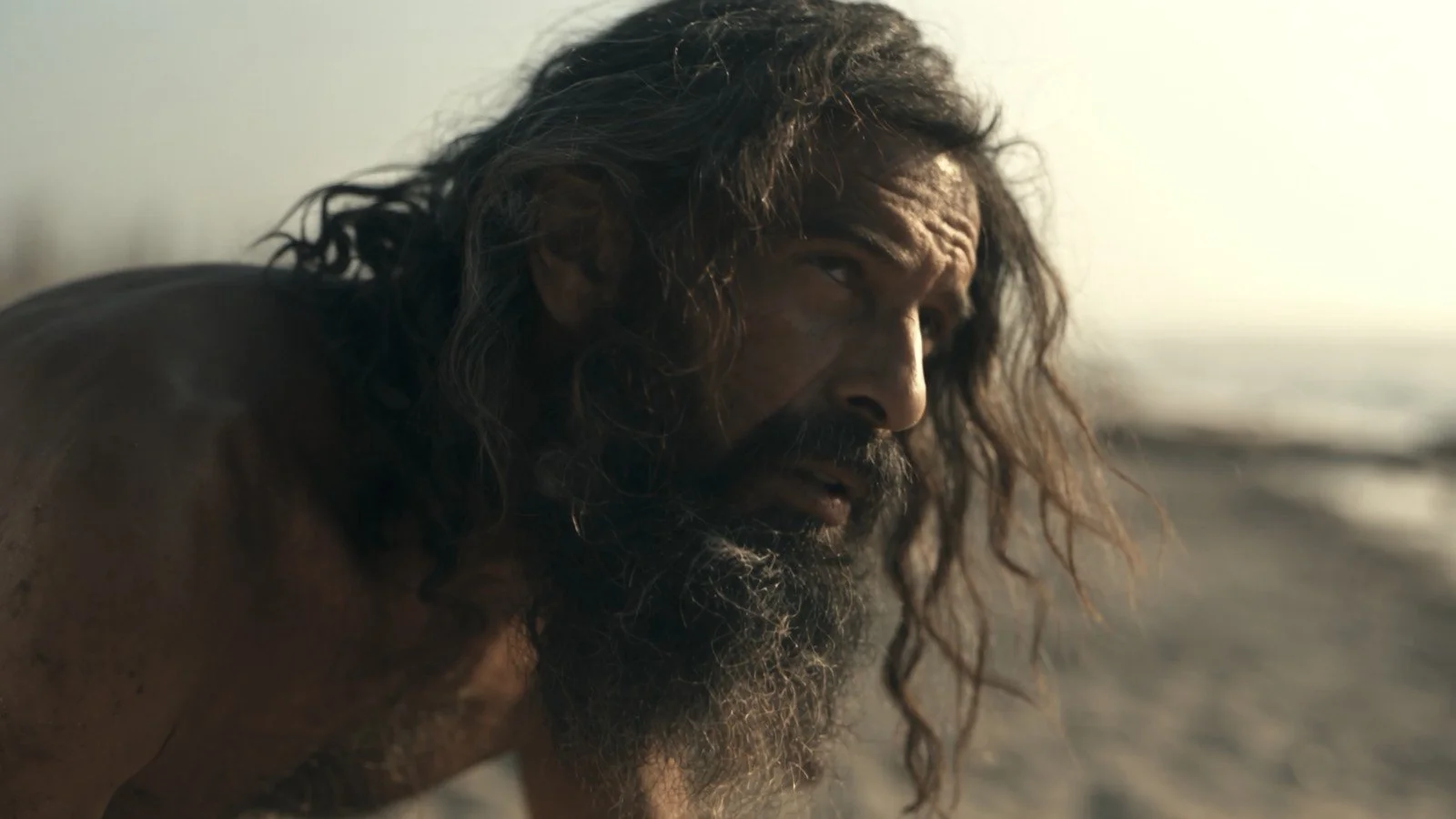
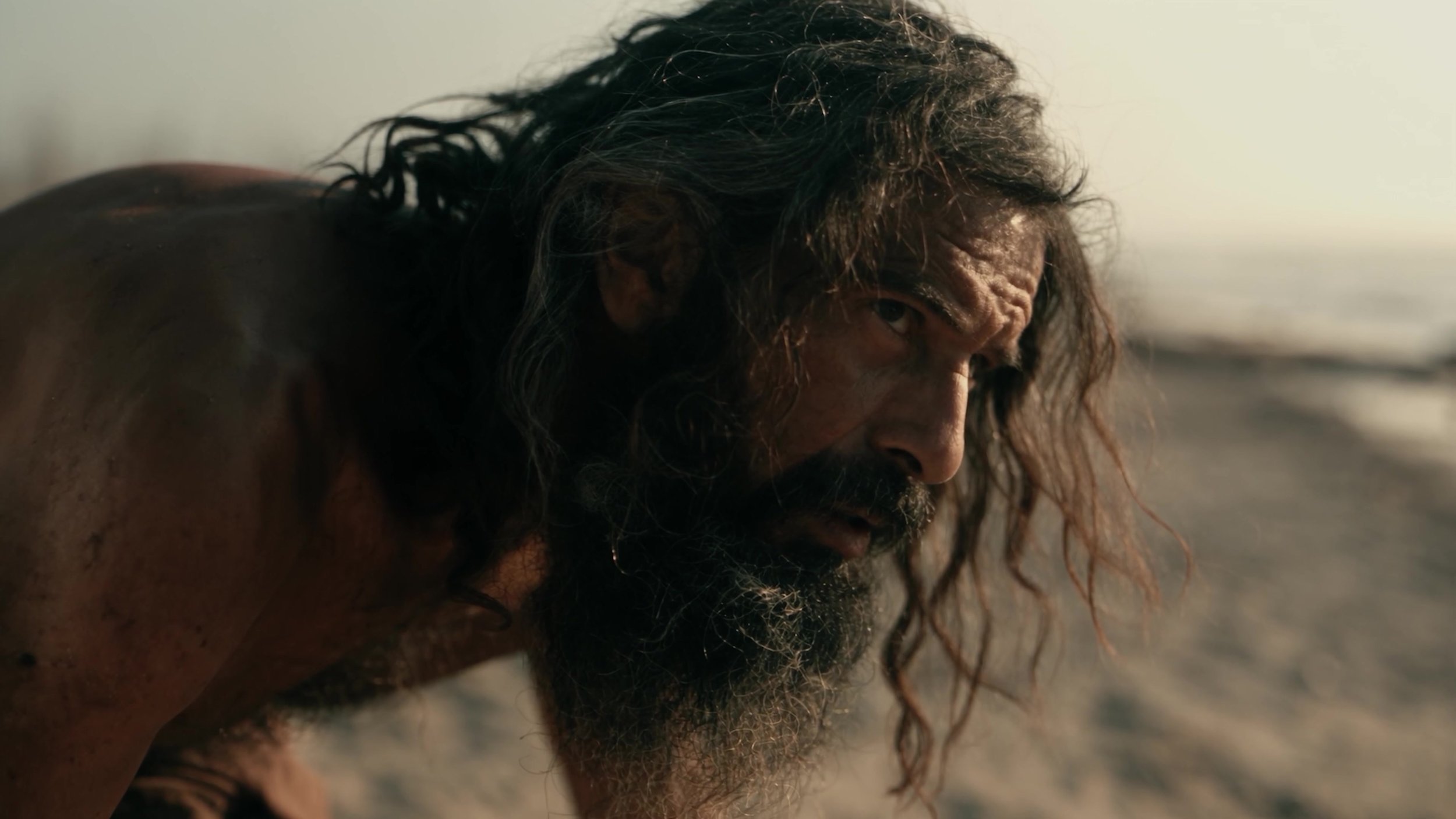
A look carries the tension before action.
Stone, wood, and rope hold the power to create or destroy.
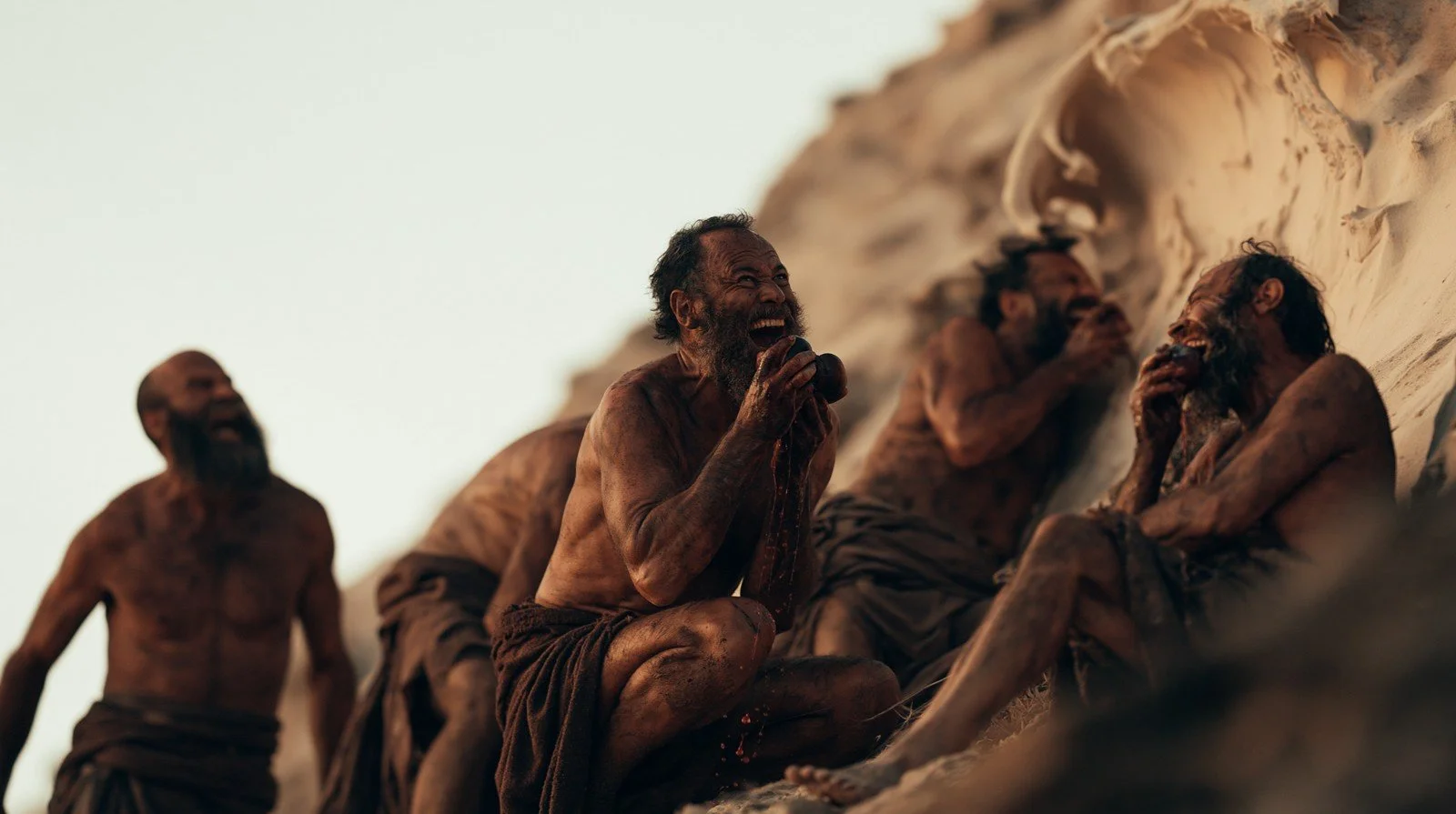
Appetite gives way to a different understanding.
The axe turns toward the source of life.
The opening sequence moves toward collapse.
Frames extracted from the supplied Scene 1 draft.
The World and Its Meaning
The island
The dying landscape makes scarcity visible. The last tree becomes both a source of food and a fragile future. Beyond it, the ocean carries time, returning the remnants of one civilization to another.
The individual and the flock
The group gives objects their power through shared belief. The protagonist’s attention rests on living things. His difference grows through small acts of observation, making him more aware and more alone.
Visual-development references.
The seed
A small possibility of life. The protagonist places it in the earth; the flock sees only food being taken away. The same action becomes care to one and betrayal to the others.
The mirror
A broken reflection captures the flock’s attention on a shore full of living resources. They choose the image of themselves before the world that could feed them.
The axe
A tool first used to harvest becomes an instrument of destruction. Its meaning changes with the hand that holds it and the choice that follows.
The ocean
The ocean acts as time: carrying objects away, returning traces of the past, and bringing consequences into a new world.
The Filmmaker
Peter Obscy
Peter Obscy is an independent filmmaker and interior architect based in the San Francisco Bay Area. His work brings spatial design, cinematic storytelling, performance, and visual effects into a shared creative process.
Following Unhandled Exception, Monkey Island continues his exploration of human behavior through constructed worlds. His approach combines 3D craft, filmed performance, and emerging image-making tools in service of the story.